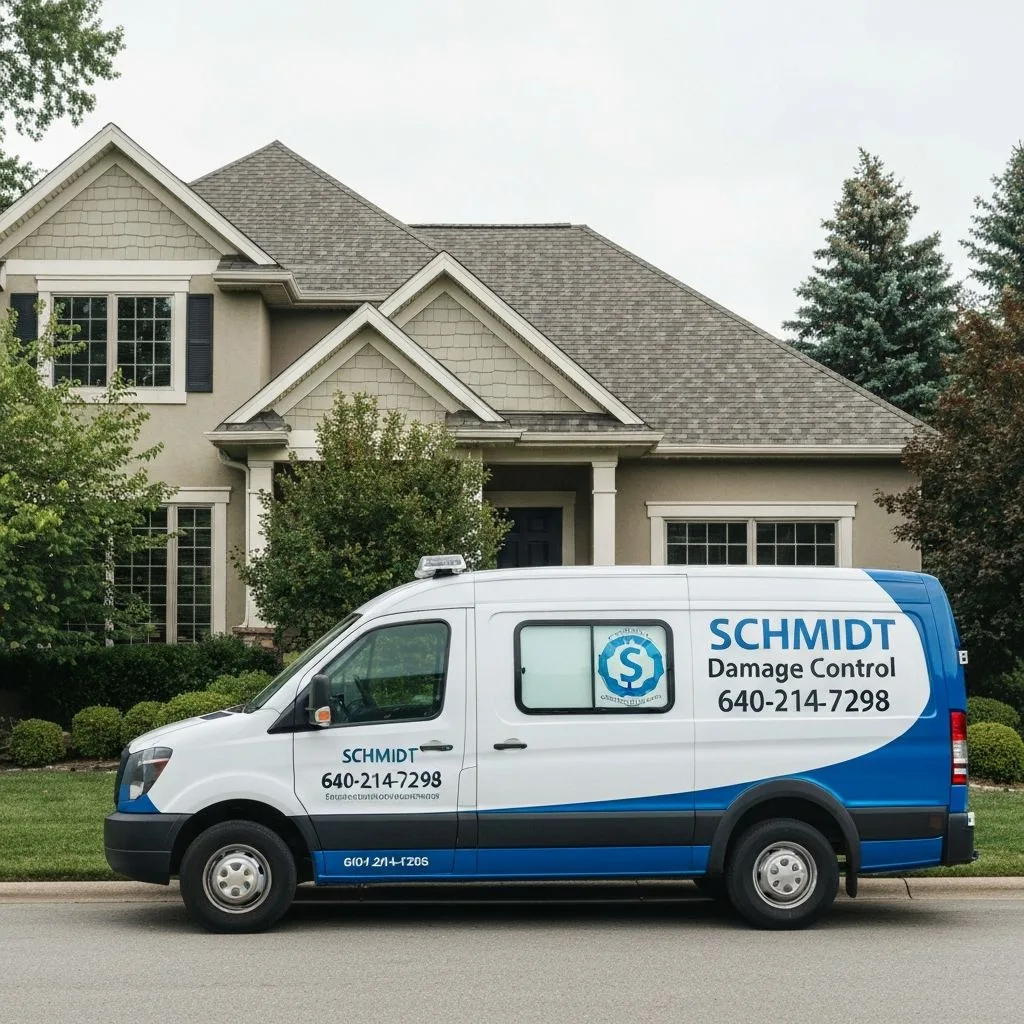
Once a Princeton fire is knocked down, the clock starts on soot acidity and on the wet framing the suppression water created. Our crew boards up what is exposed, addresses the suppression water, and runs a smoke survey reaching well past the room that burned. The dense Princeton building stock means odor migrates between units, and we contain and treat beyond the unit that burned. The full extent — char, soot travel, and suppression water — is recorded and delivered as one organized packet. Call 640-214-7298 day or night and our Princeton fire crew responds.
- Soot + smoke odor removal
- HVAC decontamination
- Pack-out + content cleaning
- Hydroxyl odor treatment
- Structural rebuild
- Insurance-scope documentation
Where Soot Actually Travels
The visible char is only part of the story — residue and moisture reach well past the burn line. Smoke molecules bond to porous materials at the molecular level, which is why air freshener and ozone sprays only mask the odor until they fade.
We treat odor at the source first, then thermal-fog or hydroxyl-treat so the smell does not return weeks later. The file traces smoke beyond the burn room with photos, so the carrier funds the full cleanup rather than the visible fire alone.
The Difference Between Masking And Removing
Real deodorization is a sequence, not a spray — source removal first, then treatment of what remains. We remove the source residue first, then use thermal fogging or hydroxyl treatment to neutralize what is bonded into porous materials.
We do not upsell a duct replacement the system does not need, and we do not skip one it does. When source removal, material removal, and treatment are all done, the smell does not come back next month.
Water Damage Restoration and the rest of your recovery
A property loss in Princeton rarely stays in one lane — fire damage restoration often overlaps with burst pipe response, severe weather recovery, mold inspection and removal, Category-3 water cleanup, structural rebuild, and our crew handles all of it under one contract. We dispatch the same standard to Trenton fire damage restoration, Fire Damage Restoration in Plainsboro, Lawrence Township fire damage restoration, West Windsor fire damage restoration and everywhere else across Mercer County.
If you searched for restoration company near Princeton, you have reached a local team — call 640-214-7298 any hour. For background, read Frozen Pipe Bursts in Princeton: What to Do in the First Hour and Where the Damage Hides on our blog, or head back to our Princeton home page to see everything we do.