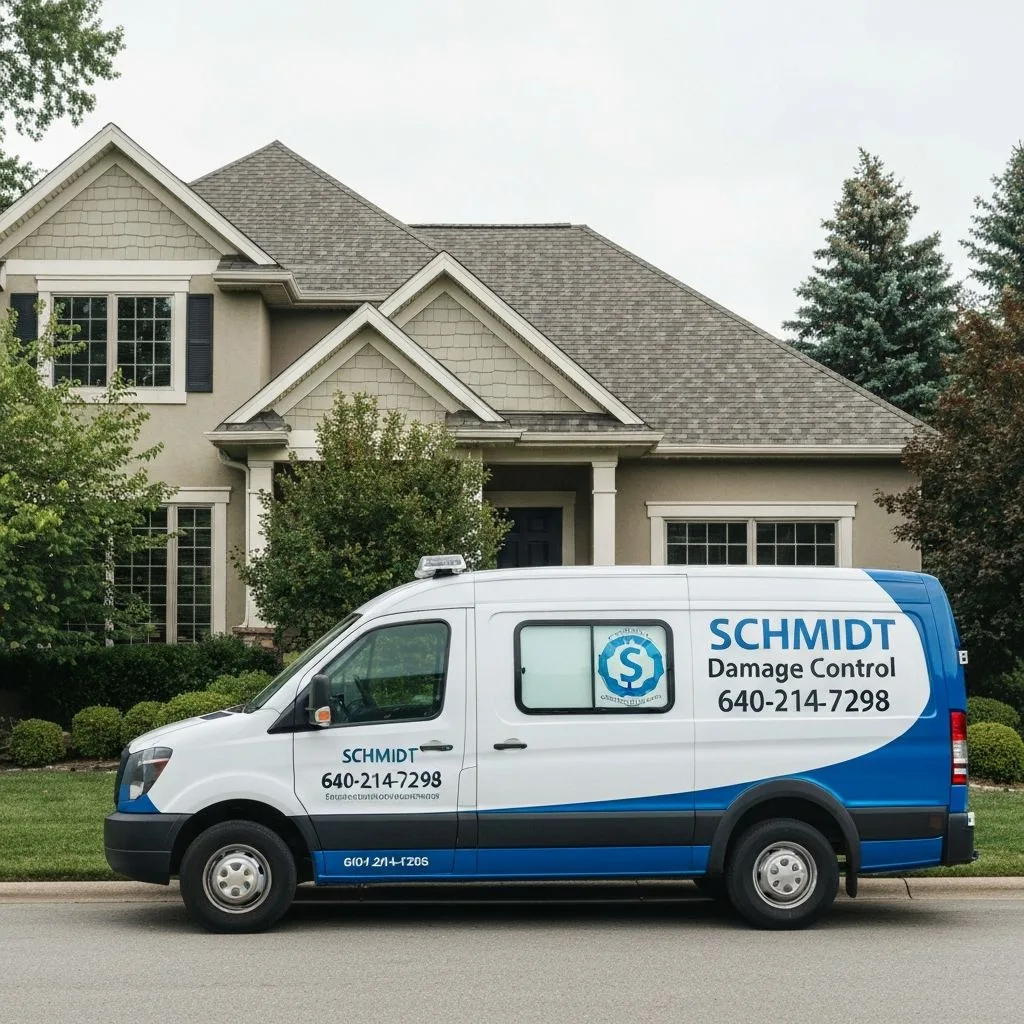
Flash flooding in Mercer County can fill a Princeton basement faster than a sump pump can keep up, especially when the power is out. We tarp, board, and shore the exterior so no more weather gets in, then run the same metered drying we would for any water loss. Older Princeton roofs and aging drains make the combined above-and-below scenario more common here than people expect. We document the cause as storm-driven and trace the water from the breach inward, so coverage is not second-guessed. Connect with us at 640-214-7298 and a crew seals the opening tonight.
- Emergency board-up + tarping
- Wind-driven rain water extraction
- Roof + envelope repair
- Tree impact damage
- Insurance documentation
- Full structural rebuild
Why A Breach Cannot Wait
The immediate risk after a storm is everything the breach lets in next — more rain, more wind, more water. The priority before anything else is preventing additional damage from continued exposure to the elements.
We seal the breach first, then trace the moisture path and run extraction and metered drying on what already entered. The distinction between wind-driven rain and rising flood water decides which policy pays, so we frame it accurately.
Protecting Yourself After Storm Damage
The most expensive storm mistakes happen in the first hour, before any crew arrives. Photograph first, stabilize second, and let the carrier inspect before anything gets thrown out or rebuilt.
Do not sign AOB paperwork from a contractor who shows up unsolicited after a storm; storm-chasers trail major weather for exactly that. You call, we stabilize, and we document — the claim stays yours and the paperwork stays clean.
Water Damage Restoration and the rest of your recovery
A property loss in Princeton rarely stays in one lane — storm damage restoration often overlaps with burst pipe response, soot removal, mold inspection and removal, Category-3 water cleanup, structural rebuild, and our crew handles all of it under one contract. We dispatch the same standard to Trenton storm damage restoration, Storm Damage Restoration in Plainsboro, Lawrence Township storm damage restoration, West Windsor storm damage restoration and everywhere else across Mercer County.
If you searched for restoration company near Princeton, you have reached a local team — call 640-214-7298 any hour. For background, read Storm Flooding Along Carnegie Lake and the Millstone River: What Princeton Homeowners Need to Know on our blog, or head back to our Princeton home page to see everything we do.